
NileByteCare vs Traditional HIS: Why Modern Architecture Matters
The Problem with Legacy Systems
Many hospitals in Egypt and the Middle East still run on legacy HIS platforms that were built decades ago. These systems share common problems:
- Monolithic architecture — one change breaks everything
- Limited scalability — can’t handle growing patient volumes
- No bilingual support — Arabic interfaces are an afterthought
- Vendor lock-in — expensive customizations and rigid contracts
- Outdated technology — security vulnerabilities and slow performance
NileByteCare: Built for Today and Tomorrow
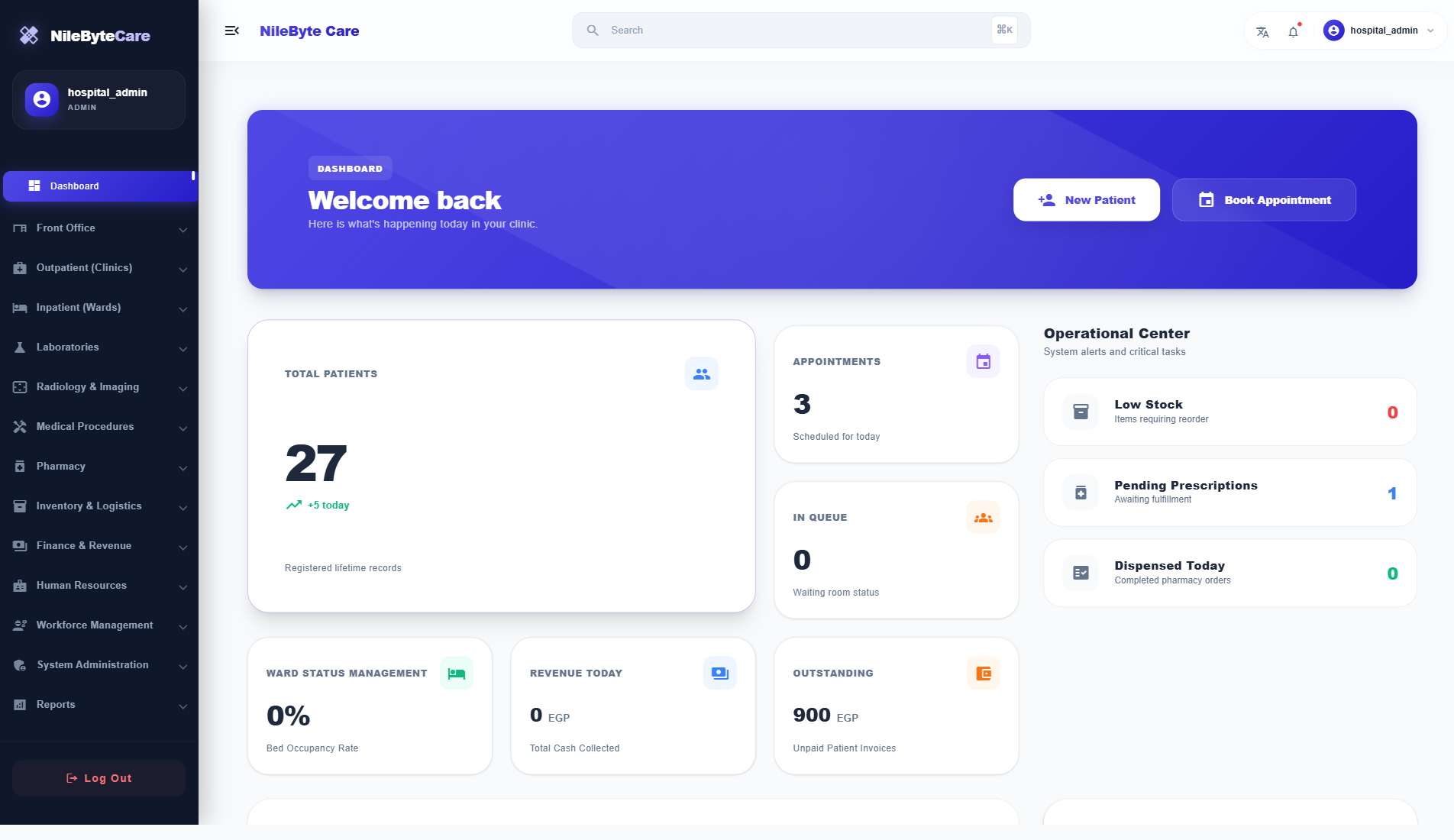
NileByteCare was designed from scratch using modern software architecture principles:
| Feature | Traditional HIS | NileByteCare |
|---|---|---|
| Architecture | Monolithic | Clean Architecture (modular) |
| Database | Single, rigid schema | Multi-tenant with separate DBs |
| Language Support | English only | Full English/Arabic |
| API Design | Custom, undocumented | RESTful, well-documented |
| Scalability | Vertical only | Horizontal and vertical |
| Deployment | On-premise only | Cloud, on-premise, hybrid |
| Mobile Access | None or limited | Responsive web + mobile-ready |
| Integration | Custom code | REST APIs, FHIR, HL7 ready |
| Updates | Complex, downtime required | Seamless, zero-downtime |
| Total Cost | High maintenance | Predictable, lower TCO |
Technology Stack that Delivers
NileByteCare uses industry-leading technologies:
- Backend: ASP.NET Core 9 — fast, cross-platform, secure
- Frontend: Angular 18 — modern, responsive, dynamic
- Database: SQL Server with multi-tenant isolation
- Real-time: SignalR for instant updates and notifications
- Caching: Redis for lightning-fast data access
- Messaging: RabbitMQ for reliable async operations
The Bottom Line
Choosing NileByteCare means choosing a system that will grow with you. No expensive upgrades. No migration nightmares. No hidden costs.
Make the smart choice for your facility’s future.
Author at NileByte — sharing insights on software and digital transformation.
Related Articles
Real-Time Notifications: Stay Informed Across Your Healthcare Facility
NileByteCare's real-time notification system keeps clinicians, nurses, lab technicians, and administrators informed with instant alerts delivered via SignalR.

Treatment Plans: Structured Care Pathways for Chronic Disease Management
NileByteCare's treatment plan module enables structured, multi-session care pathways for chronic disease management, physiotherapy, rehabilitation, and more.

Security and Access Control: Enterprise-Grade RBAC
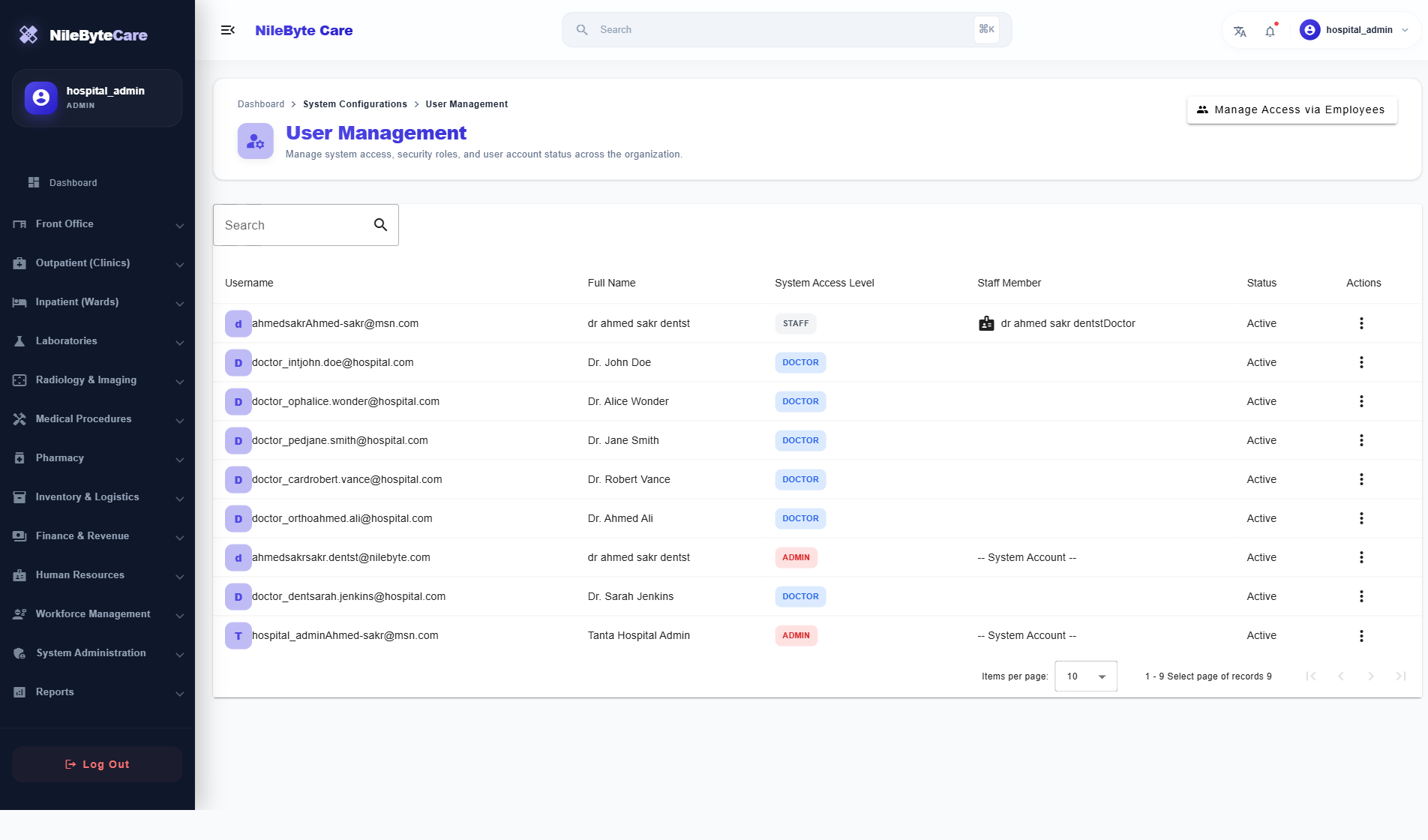
NileByteCare's role-based access control ensures every user sees only what they need. Granular permissions, audit trails, and LDAP integration provide enterprise-grade security.